Showing posts with label Mazda. Show all posts

Saturday, January 22, 2011

Mazda 6 US-spec, 2009

Mazda 6 US-spec, 2009


The original Mazda 6, introduced in late 2002 for the 2003 model year, made Zoom-Zoom the two most evocative words in the automotive lexicon. This sport sedan was the first Mazda vehicle to benefit from the spirit of a true sports car infused in a five-passenger, 4-door sedan. That revolutionary combination created a commotion in the mid-size class where strict practicality, affordability, and economy of operation usually leave no room for driving enjoyment. The original Mazda 6's vitality is what set it apart from competitors.

Times and tastes change. The all-new 2009 Mazda 6 takes everything learned in that first-generation car, as well as lessons learned from volumes of customer feedback, and proves Mazda's commitment to continuous improvement. Most important, though, this is the first Mazda vehicle designed, engineered, developed, and manufactured on US soil with the intention of surpassing American customer needs in countless categories.

Hiroshi Kajiyama served as program engineer for the new Mazda 6. Kajiyama, who graduated in electrical engineering at the Hiroshima Institute of Technology, brings 21 years of service at Mazda, ample experience with the first generation Mazda 6, and several years of program management to the project. Unlike most engineers, Kajiyama treats the Mazda 6 as a work of art rather than an inanimate machine. That attitude was key to instilling the soul of a sports car in the new Mazda 6.

Kajiyama established ambitious goals and high standards. To be widely recognized as the best vehicle available in the mid-size market, the Mazda 6's underlying concept rests solidly on three fundamental pillars:

A Unique Experience. The Mazda 6 inspires pride of ownership. Notes Kajiyama, "By elevating the quality level with exquisite craftsmanship, each Mazda 6 will form a strong bond and a powerful emotional connection with its owner. This relationship is reinforced by driving pleasure keyed to adult tastes, comfort that the driver and every passenger can feel and appreciate, and numerous special features that make every trip, long or short, a highly memorable and pleasurable experience."

An Insightful Package. The Mazda 6 goes beyond existing mid-size sedan solutions to provide innovative packaging inside a larger envelope, highly flexible seating and storage space, and an unusually attractive appearance. Kajiyama adds, "By building on our strengths and accomplishments, we're able to make the Mazda 6 the most versatile, comfortable, and enjoyable automobile this company has ever produced. This is what we mean by the evolution of Zoom-Zoom."
READ MORE - Mazda 6 US-spec, 2009

Mazda BT-50, 2009

Mazda BT-50, 2009


 Since launch in 2006, the stylish Mazda BT-50 pickup has been very popular throughout the world. This tough but sophisticated-looking lifestyle vehicle can do it all - carry bricks to a construction site or a surfboard to the beach, and after a wash-up cut a good figure for a night on the town. Its appeal reaches across target groups like no other car in the Mazda portfolio: from commercial users in rural areas of Europe and Asia, to fire-fighters in Greece, to young urbanites with sporty or adventurous lifestyles. Since launch, Mazda has sold over 60,000 units globally (over 19,000 in Europe) while winning several awards along the way during the 30 months period. These include Ute of the Year in Australia and Off-road Competition's Car of the Year in Russia.

Exterior updates for higher quality look and more choice
The Mazda BT-50 facelift can handle whatever a commercial user or an off-road adventurous lifestyle demand of it. As with the outgoing model, three cab versions are available (depending on market) with room for two (Regular Cab), four (Freestyle Cab) or five passengers (Double Cab) and cargo box lengths of 2,280 mm, 1,753 mm or 1,530 mm respectively. It retains its high quality, single-fascia front bumper, but now with an all-new design. The facelift front end has a large 'oblique H' with upper arms that grow out of the bonnet's character lines, and lower arms at the base of the lower bumper. This visually integrates the individual parts of the front end into a strong, harmonious Mazda family face. The Mazda five-point grille, for instance, is more clearly defined here, and the trapezoidal shapes of lower openings hint at the pickup's high level of driving fun. Designers then added new front headlamps with bright silver mouldings that make the front end seem wider giving the facelift version a stylish and muscular look.

More variability - a larger list of exterior combinations
The Mazda BT-50 facelift adds exterior features that will allow customers to differentiate their own models to a greater degree than ever before. The choice of single colours is increased from 9 to 11, including 5 new colours, and all 3 two-tone colours are replaced - highlight silver metallic combined with either titanium grey metallic, lagoon blue mica or black mica. Body coloured overfenders are now standard for all mica/metallic exterior colours on Mid and High Grades, the vehicle's side sills are now in a new silver metallic colour and a new 16-inch alloy wheel design (for 4WD models) is introduced. Customers looking for even more style can now order dark tinted glass for the side and rear windows for High Grade models as well (depending on market).

Interior - new fabrics, colours and lighting
The original Mazda BT-50 delivered interior stylishness and build quality befitting a sedan. The facelift model inherits its predecessor's interior it and finish with very small gaps between the dashboard and door trim, and adds higher quality fabrics, colours and lighting for even more sedan-like feel. For a fresher ambiance, lighting for the driver metres, climate and audio controls, and for the indirect lighting at the base of the centre console, is now amber. New fabrics are also introduced for the seats and door trim. High and Mid Grade seats now have a new chequered fabric for the seat centre, woven to give off a quality lustre, and Low Grade seats also have new patterned fabrics in the centre, replacing the plain grey of the outgoing model. The centre panel is also upgraded for the Mazda BT-50 facelift with an all-silver look that matches the new fabrics and lighting for more sedan-like sophistication.

Comfort like a passenger car
Sedan-like ambience is combined with sedan-like comfort, equipment, and interior functionality you would expect from a pickup. All versions of the Mazda BT-50 facelift have front seats that offer full sedan-like comfort, and the Double Cab features a large centre armrest between its bench-type rear seats, providing four adults with superior comfort. The pickup's high seating position is optimised by a front bonnet and a cargo box wall designed to support front and rear visibility, which is important for a vehicle with as many uses as this. The facelift version adds new heated side mirrors (depending on grade), which defog/defrost quickly. Inherited from the original Mazda BT-50 is a climate system that includes a two-intake duct blower for superior heating/cooling. Mazda BT-50 facelift also inherits its quiet interior - with large amounts of insulation, a low-noise air cleaner and radiator fan, and a smooth-running common-rail diesel with dual-mass flywheel.

Superior functionality inside and out
Loading and using the Mazda BT-50 facelift on a daily basis is easy, making it the ideal companion for work or play. The Freestyle Cab features Mazda's unique centre-opening doors that provide a wide opening for getting into and out of the rear seats, or for loading something behind the front seats. It still has a single-action lever in the tailgate for easy opening and closing, there are rope hooks on the outer edge or the insides of the cargo-box walls, and there are load rest stoppers (depending on grade and market) at the rear of the cabin that can be raised to secure items too long for the cargo bed. There are even guiding grooves on the cargo-box walls for sliding in dividers, which create two load areas in the back.

The front seats are slide adjustable and can be tilted forward. The steering wheel is tilt adjustable, allowing just about anyone to find the right driving position. Interior storage is at a level not usually seen in a pickup interior. There is a slide-out tray above the glovebox strong enough to hold up to 10 kg, a large floor console storage box and even a handy tool box under the rear cushion of the left rear seat (Freestyle Cab). There are pockets in the front and rear doors for bottles, power adjustable side mirrors, and a remote fuel cap cover release. Power windows with safety power cut-off all around and a one-touch up and down function for the driver, power door lock/unlock from the driver's seat, as well as a retractable key with keyless entry system (on Mid and High Grades) provide additional convenience.

New equipment - AUX jack for connecting an MP3 player
To take full advantage of the Mazda BT-50 facelift's quiet interior is an audio system (depending on grade and market) that employs a high-performance amplifier and audio level control (ALC), which automatically adjusts the tone characteristics between three levels to match the speed of the pickup at any given moment for just the right volume level. The audio system includes a radio, a CD player and up to four speakers (Regular Cab has two speakers). High Grade versions are equipped with a six speaker system with a 6-CD changer. The facelift adds an auxiliary (AUX) jack to the audio system, which allows you to play music from your MP3 player directly using the audio system of the vehicle.

Strong and fun to drive
The Mazda BT-50 facelift retains the MZR-CD 2.5-litre common-rail from its predecessor, known for being strong, reined and fuel- efficient. It is a DOHC 16-valve diesel engine that employs a variable- geometry turbo charger and a large intercooler to produce maximum power of 105 kW/143 PS at 3,500 rpm, and maximum torque of 330 Nm as low as 1,800 rpm. This gives lively engine response to pedal input for Zoom-Zoom driving fun when unloaded, and takes care of business towing up to 3,000 kg with a braked trailer (4x4 models). A variable swirl control valve (VSCV) is also employed and is combined with an optimised exhaust gas recirculation (EGR) system and a high-efficiency EGR cooler to ensure Euro Stage IV compliance and low tax costs in most countries.

The facelift version of the Mazda BT-50 inherits the acclaimed rear-wheel drive transmission of the outgoing model that meets the demands of commercial customers, lifestyle customers, or both at the same time. It has Mazda's precise, easy-to-shift five-speed manual transmission in either a 2WD only version or a 2WD/4WD version. The latter transmission not only has a large and robust transfer case that converts the engine's high torque into great traction in any on-road or off-road situation, it is also easy and convenient to use. It includes an electric Remote Free Wheel (RFW) hub system that allows shifting between 2WD and 4WD while driving up to 100 km/h. Back on solid roads and in 2WD mode, pushing the 'RFW' button automatically disconnects the front differential and prop shaft from the front wheels. This function enables you to drive at motorway speed right after driving offroad, without stopping in between. It contributes to better fuel economy, lower noise and optimal durability of the transmission. All models (except some 2WD Low Grade versions) are equipped with a rear limited- slip differential (LSD) with an enhanced torque ratio in line with the engine's higher torque, which automatically adjusts drive power between the two rear wheels to maintain traction on just about all kinds of surfaces.
READ MORE - Mazda BT-50, 2009

Sunday, January 2, 2011

Ethanol Powered Mazda Furai Racecar


This is a concept vehicle which few of us will ever drive. The Furai is Mazda’s next hope in the future of car racing. While going green on the race track is not exactly an eco-minded endeavor, we’re still intrigued that this vehicle can be fully powered by ethanol. The very cool looking performance sports car shows that if ethanol has a place in the auto industry, that place is in the car racing arena.


It is a powerful machine, capable of achieving 60mph in about 3.2 seconds, and its maximum speed is 172mph. Instead of working from a regular chassis, the manufacturer decided to begin with a fully formed Courage C65 chassis, Mazda’s chassis of choice. The vehicle weighs a bit less than a ton, and its engine produces around 460bhp.

The Furai, while fully functioning, is never going to make it past the concept stage. It is simply a promotional vehicle. But at least they fitted it with an ethanol engine. There is no doubt that ethanol is a dicey proposition as a fuel source for vehicles. The fact is, that it can cause a number of problems if it’s sourcing is not managed properly. However, it is a potential stopgap replacement to our energy problems.


READ MORE - Ethanol Powered Mazda Furai Racecar

Ethanol Powered Mazda Furai Racecar


This is a concept vehicle which few of us will ever drive. The Furai is Mazda’s next hope in the future of car racing. While going green on the race track is not exactly an eco-minded endeavor, we’re still intrigued that this vehicle can be fully powered by ethanol. The very cool looking performance sports car shows that if ethanol has a place in the auto industry, that place is in the car racing arena.


It is a powerful machine, capable of achieving 60mph in about 3.2 seconds, and its maximum speed is 172mph. Instead of working from a regular chassis, the manufacturer decided to begin with a fully formed Courage C65 chassis, Mazda’s chassis of choice. The vehicle weighs a bit less than a ton, and its engine produces around 460bhp.

The Furai, while fully functioning, is never going to make it past the concept stage. It is simply a promotional vehicle. But at least they fitted it with an ethanol engine. There is no doubt that ethanol is a dicey proposition as a fuel source for vehicles. The fact is, that it can cause a number of problems if it’s sourcing is not managed properly. However, it is a potential stopgap replacement to our energy problems.


READ MORE - Ethanol Powered Mazda Furai Racecar

Sunday, December 26, 2010

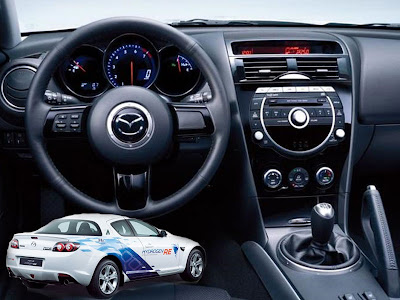
2009 Mazda Sports Car RX-8 Hydrogen RE

2009 Mazda Sports Car RX-8 Hydrogen RE

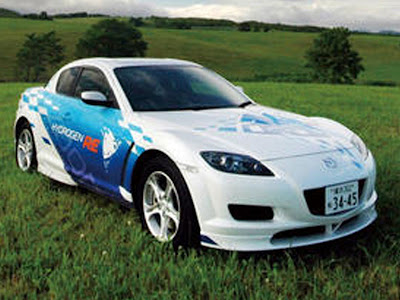
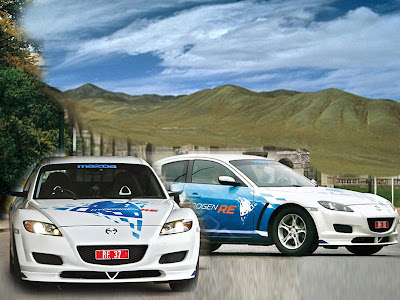
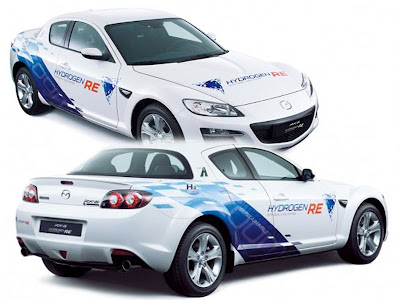
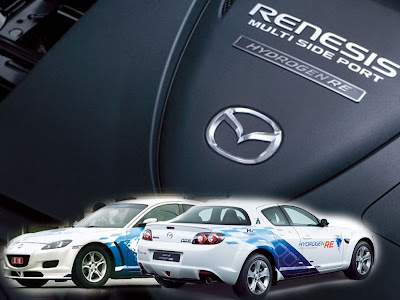
2009 Japan Mazda Motor Corporation (HIROSHIMA) announced that it has built the first Mazda RX-8 Hydrogen RE vehicle with Norwegian specifications, developed specifically for participation in HyNor, Norway’s national hydrogen project. The first unit will take part in ceremonies marking the official opening of HyNor’s hydrogen filling stations.
2009 Mazda Sports Car RX-8 Hydrogen RE

The initial opening ceremony will be held in Oslo on May 11, 2009. The RX-8 Hydrogen RE will then undergo certification to meet local standards and will be used for maintenance staff training. Mazda plans to commence leasing of Norwegian specification RX-8 Hydrogen RE models in Norway in summer 2009.
2009 Mazda Sports Car RX-8 Hydrogen RE

Unlike the RX-8 Hydrogen RE currently being leased in Japan, the HyNor-specification Mazda RX-8 Hydrogen RE is based on the latest European-specification Mazda RX-8 with left-hand drive and a manual transmission.
2009 Mazda Sports Car RX-8 Hydrogen RE

The HyNor project aims to enable hydrogen vehicles to travel along a 580-kilometer stretch of highway by establishing a chain of hydrogen stations between Stavanger and Oslo in Norway.
2009 Mazda Sports Car RX-8 Hydrogen RE

Mazda agreed to collaborate with HyNor on the project in November 2007 and began validation of the RX-8 Hydrogen RE’s driving performance on Norwegian public roads in October 2008.
READ MORE - 2009 Mazda Sports Car RX-8 Hydrogen RE

2009 Mazda Sports Car RX-8 Hydrogen RE

2009 Mazda Sports Car RX-8 Hydrogen RE

2009 Japan Mazda Motor Corporation (HIROSHIMA) announced that it has built the first Mazda RX-8 Hydrogen RE vehicle with Norwegian specifications, developed specifically for participation in HyNor, Norway’s national hydrogen project. The first unit will take part in ceremonies marking the official opening of HyNor’s hydrogen filling stations.
2009 Mazda Sports Car RX-8 Hydrogen RE

The initial opening ceremony will be held in Oslo on May 11, 2009. The RX-8 Hydrogen RE will then undergo certification to meet local standards and will be used for maintenance staff training. Mazda plans to commence leasing of Norwegian specification RX-8 Hydrogen RE models in Norway in summer 2009.
2009 Mazda Sports Car RX-8 Hydrogen RE

Unlike the RX-8 Hydrogen RE currently being leased in Japan, the HyNor-specification Mazda RX-8 Hydrogen RE is based on the latest European-specification Mazda RX-8 with left-hand drive and a manual transmission.
2009 Mazda Sports Car RX-8 Hydrogen RE

The HyNor project aims to enable hydrogen vehicles to travel along a 580-kilometer stretch of highway by establishing a chain of hydrogen stations between Stavanger and Oslo in Norway.
2009 Mazda Sports Car RX-8 Hydrogen RE

Mazda agreed to collaborate with HyNor on the project in November 2007 and began validation of the RX-8 Hydrogen RE’s driving performance on Norwegian public roads in October 2008.
READ MORE - 2009 Mazda Sports Car RX-8 Hydrogen RE

Saturday, December 11, 2010

Mazda5 Compact Multi-Activity Car 2012

2012 Mazda5 new car price list is starting from $19,990 one of the most stylish sport car exterior with comfortable interior design. Presented at Los Angeles Car Auto Show 2010, Sideways from the innovative sheet metal, the 2012 Mazda5 takes an updated interior car design similar to which of the Mazda3 compact stylish car and a new four-cylinder engine that presents slightly more horsepower. The well-equipped new car 2012 Mazda5 Sport design specification includes 16-inch luxury alloy wheels with 205/55/R16 all-season tires, power mirrors, air conditioning, power windows and door locks, AM/FM/CD/MP3 stereo through 6 speakers, audio auxiliary jack, tilt and telescoping steering wheel, remote key-less entry system, one-touch up/down driver’s window, 50/50 split fold-down third row seats and steering wheel-mounted audio and cruise controls.

The 2012 Mazda5 top-of-the line Grand Touring model from price $24,670, such as the old power plant, 2012 Mazda5 will be offered with a manual or automatic transmission, receiving an extra cog. 2012 Mazda5 adds a power moon roof, xenon high-intensity discharge (HID) headlights, automatic on/off headlights, heated door mirrors, rain-sensing windshield wipers, anti-theft alarm system, driver’s seat lumbar support adjustment, heated front seats, in-dash 6-disc CD changer, leather-trimmed seats and Sirius satellite radio. Operations in Canada are managed by Mazda Canada, Inc., located in Ontario; and in Mexico by Mazda Motor de Mexico in Mexico City.


Mazda5 Compact Multi-Activity Car 2012
READ MORE - Mazda5 Compact Multi-Activity Car 2012

Mazda 6 SAP Wagon, 2009

Mazda 6 SAP Wagon, 2009


The second-generation Mazda 6 was launched in November 2007 and represented an evolution of Mazda Zoom-Zoom.

Mazda 6 has always been a driver's car and with the launch of the new-generation model last year, the fun factor was improved even further. The second-generation Mazda 6 was introduced originally with four different engines - three lively MZR petrol engines (in 2.5, 2.0 and 1.8-litre displacements) delivering power between 170 PS to 120 PS, and a MZR-CD 2.0-litre common-rail turbo diesel producing 140 PS and 330 Nm of torque. Mazda now introduces a new clean turbo diesel in three power derivatives that is one of the quietest and most powerful in its class.

Mazda's new MZR-CD 2.2-litre turbo diesel has a lively yet cultivated character that will offer a truly exclusive driving experience under the bonnet of the second-generation Mazda 6. Offered in three versions producing 185, 163 and 125 PS of maximum output and powerful torque of 400, 360 and 310 Nm respectively, the MZR- CD 2.2 will meet the demands of a wide spectrum of customers in Europe.

Delivering the Power - Output and Torque

To realise this kind of power and torque with 2.2-litres of displacement, the MZR-CD 2.2 employs a highly efficient variable-geometry turbo charger (VGT) with curved (instead of straight) vanes on the turbine (exhaust) side. This increases maximum available torque at both low and high engine speeds, while also increasing all-important low- end response (as low as only 1,800 rpm with a lat maximum torque curve that continues until 3,000 rpm) that contributes smooth and powerful driving feel. When combined with an abradable seal on the compressor side (intake side), which reduces the clearance between the blade and the compressor housing, these deliver superior turbocharger response at just about all engine speeds.

Converting the engine's combustion energy into this much engine torque meant the pistons had to be designed to take the resulting high combustion pressure and temperatures. As a consequence, the pistons are made of an aluminium alloy with improved high- temperature fatigue strength. A half-Keystone cross-section top- ring with improved carbon scavenging abilities is used, and the groove for the top ring is made more durable with the adoption of a cooled ring carrier that increases the groove's cooling capability.

Mazda engineers also increased the fuel injection pressure to 200 MPa (by comparison, the previous generation MZR-CD 2.0- litre turbo diesel uses 180 MPa). They realised this by making functional improvements to the high-pressure pump, among other improvements, and by new injectors featuring 10 spray holes per injector (instead of the 6 spray holes for the MZR-CD 2.0-litre) that are smaller (reduced from 0.13 mm to just 0.119 mm). These changes enable more precise injection timing, and an increase in the number of times of injection and injection amount. And it allowed the fuel injection patterns at transitional states to be more precisely controlled. As a result, the Mazda 6 MZR-CD 2.2 provides superior acceleration in those situations you need it most, like entering the motorway. It also surpasses its competitors in lower speed acceleration. Acceleration in 3rd gear from 50 to 100 km/h, for example, is 1.7 seconds faster than the MZR-CD 2.0-litre.

Low Fuel Consumption
This new diesel engine also meets the requirements of Mazda's 'Sustainable Zoom-Zoom' plan by being frugal at the pump: all power derivatives use between 5.5 and 5.7 litres of fuel per 100 km (combined), some of the segment's lowest.

New injector with 10 spray holes

It achieves this by employing highly responsive solenoids for the common-rail injection system that achieve a minimum injection interval of just 0.2 ms (the MZR-CD 2.0 is 0.3 ms), which speeds up the minimum injection interval by about 30 percent, improves its responsiveness and lowers fuel usage. Fuel is also saved by lowering the compression ratio to 16.3:1 and utilizing the temperature cooling effect this causes, which secures more mixing time until ignition, and allows a more precise fuel-injection pattern. As a result, fuel consumption is a low 5.5 to 5.7 litres (depending on derivative) with CO 2 emissions from between 147 to 152 g/km. In fact, the MZR- CD 2.2-litre offers substantially higher power and torque than the previous-generation MZR-CD 2.0-litre, while delivering equal levels of fuel consumption and CO 2 emissions.

Low Emissions - Particulate Filter with World's First Ceramic Support Matrix Structure

Mazda engineers not only made the new 2.2-litre turbo diesel powerful and low consumption, they also lowered the amount of raw emissions and raised the efficiency of its after-treatment technologies. The engine's highly responsive fuel-injection technologies have new injectors (see above) that yield better atomized spray characteristics. These are combined with an exhaust-gas recirculation (EGR) system with a cooler bypass structure - that decreases unburned gases and NOx - and the high- response solenoids described above, to realise superior emissions performance without sacrificing power.

Emissions are then treated by a diesel particulate filter that uses a unique Mazda-developed, ceramic support matrix structure, which is the first of its kind to go into production in the world. Previous diesel particulate filters converted particulate matter (PM) into CO 2 by reacting the PM with the oxygen in the exhaust gas at the surface of the catalytic particle. This meant that the time needed for filter regeneration was determined by the amount of oxygen on the surface of the catalyst.

When the temperature of the exhaust gas is raised to quicken the regeneration time, then technological issues - like higher fuel usage or the ceramics exceeding their thermal resistance limit - can occur. Mazda solved these issues by using highly thermal resistant material for the ceramic monolith of its new diesel particulate filter, and designing the internal structure of the ceramic support matrix with passages for oxygen to enable a large amount of oxygen to be utilized for PM combustion. With this, Mazda has succeeded in significantly increasing the PM combustion speed. As a result, the number of times the diesel particulate filter has to regenerate (in combined mode) is cut in half, and the time necessary for each regeneration phase is shortened by one third. For owners of the new Mazda 6 MZR-CD 2.2-litre turbo diesel, this means worry-free filter regeneration and, because fewer regeneration phases are required and each takes less time, less fuel consumption overall.

Running Quiet
The new Mazda 6 MZR-CD 2.2-litre common-rail not only offers superior output, fuel economy and emissions performance, it is also one of the quietest engines in its segment with this amount of torque. This ensures a driving experience that is one of the non- premium segment's most exclusive. To achieve this, the new engine has a lower block with a very rigid aluminium-alloy structure, with the bottom of the cylinder block skirt and the cylinder block's main bearing caps bolted to the lower block at 18 separate locations. This high structural rigidity is combined with a front chain-driven cassette-type balancer shaft to suppress booming noise and lower radiated noise, and to deliver optimised pedal response and engine sound for a reined acceleration feel.

Packaging and Weight Management

Keeping the new MZR-CD 2.2-litre engine as close as possible in size and weight to that of the MZR-CD 2.0-litre diesel was a key factor in ensuring exhilarating performance combined with fuel efficiency and low emissions. Some of the newly adopted technologies, such as the balancer shaft and DOHC, result in increased size and weight. Nonetheless, numerous innovations were added to manage size and weight increases, with the goal of maintaining packaging and keeping the weight increase within just 6.0 kg of the previous MZR- CD 2.0-litre turbo diesel.

Due to the increase in displacement, the stroke of the MZR-CD 2.2 was lengthened by 8 mm compared to the MZR-CD 2.0. At the same time, the overall length of the connecting rods was shortened by optimizing their design. As a result, their weight remains at the same level as in the MZR-CD 2.0. The adoption of a balancer shaft that decreases vibration caused by reciprocating motion made a thinner cylinder block with fewer ribs possible (if the MZR-CD 2.2 had no balancer shaft, the cylinder block would have been 1.9 kg heavier than that of MZR-CD 2.0, and its crankshaft 1.3 kg heavier.). Furthermore, decrease in size and weight was achieved by making the balancer housing, oil pump housing, and the oil suction pipe a single structure. To achieve even more weight reduction, while increasing the cooling capability of the new engine, the oil cooler is made of aluminium (-0.6 kg). The weight of the cam cover is also reduced by making it out of plastic (-1.0 kg).

Packaging and Weight Management

Keeping the new MZR-CD 2.2-litre engine as close as possible in size and weight to that of the MZR-CD 2.0-litre diesel was a key factor in ensuring exhilarating performance combined with fuel efficiency and low emissions. Some of the newly adopted technologies, such as the balancer shaft and DOHC, result in increased size and weight. Nonetheless, numerous innovations were added to manage size and weight increases, with the goal of maintaining packaging and keeping the weight increase within just 6.0 kg of the previous MZR- CD 2.0-litre turbo diesel.

Due to the increase in displacement, the stroke of the MZR-CD 2.2 was lengthened by 8 mm compared to the MZR-CD 2.0. At the same time, the overall length of the connecting rods was shortened by optimizing their design. As a result, their weight remains at the same level as in the MZR-CD 2.0. The adoption of a balancer shaft that decreases vibration caused by reciprocating motion made a thinner cylinder block with fewer ribs possible (if the MZR-CD 2.2 had no balancer shaft, the cylinder block would have been 1.9 kg heavier than that of MZR-CD 2.0, and its crankshaft 1.3 kg heavier.). Furthermore, decrease in size and weight was achieved by making the balancer housing, oil pump housing, and the oil suction pipe a single structure. To achieve even more weight reduction, while increasing the cooling capability of the new engine, the oil cooler is made of aluminium (-0.6 kg). The weight of the cam cover is also reduced by making it out of plastic (-1.0 kg).

Mazda 6 - the first Mazda with Rear Vehicle Monitoring System


Not only does the Mazda 6 2.2-litre diesel meet the requirements of Mazda's 'Sustainable Zoom-Zoom' strategy by delivering high power and torque with low consumption, it also meets the strategy's focus on improved safety by introducing a new vehicle monitoring system to the line-up as an enhancement to its already long list of active safety features. Employing two wide-angle, 24 GHz microwave radar units on the right and left side of the rear bumper, this system is a fully independent active safety feature that detects and warns the driver of an approaching vehicle - when driving at speeds over 60 kilometers per hour - before he has a chance to change lanes by mistake. It also detects vehicles driving in the blind spot area, and is effective even in bad weather conditions.

READ MORE - Mazda 6 SAP Wagon, 2009

Mazda 6 SAP, 2009

Mazda 6 SAP, 2009


The second-generation Mazda 6 was launched in November 2007 and represented an evolution of Mazda Zoom-Zoom. It set a new standard in the non-premium CD segment for its combination of eye-catching stylishness, exclusive driving experience and insightful packaging, all offered in three distinct body styles. Since launch, it has found over 85,000 owners in Europe and has been contributing to Mazda Motor Europe's record sales in 2008. Now the Mazda 6 is about to get even more popular with the introduction of a new Mazda-developed 2.2-litre turbo diesel engine that is one of the quietest and most powerful in its segment and a new rear vehicle monitoring system for more active safety.

Mazda 6 has always been a driver's car and with the launch of the new-generation model last year, the fun factor was improved even further. The second-generation Mazda 6 was introduced originally with four different engines - three lively MZR petrol engines (in 2.5, 2.0 and 1.8-litre displacements) delivering power between 170 PS to 120 PS, and a MZR-CD 2.0-litre common-rail turbo diesel producing 140 PS and 330 Nm of torque. Mazda now introduces a new clean turbo diesel in three power derivatives that is one of the quietest and most powerful in its class.

Delivering the Power - Output and Torque


To realise this kind of power and torque with 2.2-litres of displacement, the MZR-CD 2.2 employs a highly efficient variable-geometry turbo charger (VGT) with curved (instead of straight) vanes on the turbine (exhaust) side. This increases maximum available torque at both low and high engine speeds, while also increasing all-important low- end response (as low as only 1,800 rpm with a lat maximum torque curve that continues until 3,000 rpm) that contributes smooth and powerful driving feel. When combined with an abradable seal on the compressor side (intake side), which reduces the clearance between the blade and the compressor housing, these deliver superior turbocharger response at just about all engine speeds.

Converting the engine's combustion energy into this much engine torque meant the pistons had to be designed to take the resulting high combustion pressure and temperatures. As a consequence, the pistons are made of an aluminium alloy with improved high- temperature fatigue strength. A half-Keystone cross-section top- ring with improved carbon scavenging abilities is used, and the groove for the top ring is made more durable with the adoption of a cooled ring carrier that increases the groove's cooling capability.

Mazda engineers also increased the fuel injection pressure to 200 MPa (by comparison, the previous generation MZR-CD 2.0- litre turbo diesel uses 180 MPa). They realised this by making functional improvements to the high-pressure pump, among other improvements, and by new injectors featuring 10 spray holes per injector (instead of the 6 spray holes for the MZR-CD 2.0-litre) that are smaller (reduced from 0.13 mm to just 0.119 mm). These changes enable more precise injection timing, and an increase in the number of times of injection and injection amount. And it allowed the fuel injection patterns at transitional states to be more precisely controlled. As a result, the Mazda 6 MZR-CD 2.2 provides superior acceleration in those situations you need it most, like entering the motorway. It also surpasses its competitors in lower speed acceleration. Acceleration in 3rd gear from 50 to 100 km/h, for example, is 1.7 seconds faster than the MZR-CD 2.0-litre.

Low Fuel Consumption

This new diesel engine also meets the requirements of Mazda's 'Sustainable Zoom-Zoom' plan by being frugal at the pump: all power derivatives use between 5.5 and 5.7 litres of fuel per 100 km (combined), some of the segment's lowest.

New injector with 10 spray holes

It achieves this by employing highly responsive solenoids for the common-rail injection system that achieve a minimum injection interval of just 0.2 ms (the MZR-CD 2.0 is 0.3 ms), which speeds up the minimum injection interval by about 30 percent, improves its responsiveness and lowers fuel usage. Fuel is also saved by lowering the compression ratio to 16.3:1 and utilizing the temperature cooling effect this causes, which secures more mixing time until ignition, and allows a more precise fuel-injection pattern. As a result, fuel consumption is a low 5.5 to 5.7 litres (depending on derivative) with CO 2 emissions from between 147 to 152 g/km. In fact, the MZR- CD 2.2-litre offers substantially higher power and torque than the previous-generation MZR-CD 2.0-litre, while delivering equal levels of fuel consumption and CO 2 emissions.

Low Emissions - Particulate Filter with World's First Ceramic Support Matrix Structure

Mazda engineers not only made the new 2.2-litre turbo diesel powerful and low consumption, they also lowered the amount of raw emissions and raised the efficiency of its after-treatment technologies. The engine's highly responsive fuel-injection technologies have new injectors (see above) that yield better atomized spray characteristics. These are combined with an exhaust-gas recirculation (EGR) system with a cooler bypass structure - that decreases unburned gases and NOx - and the high- response solenoids described above, to realise superior emissions performance without sacrificing power.

Emissions are then treated by a diesel particulate filter that uses a unique Mazda-developed, ceramic support matrix structure, which is the first of its kind to go into production in the world. Previous diesel particulate filters converted particulate matter (PM) into CO 2 by reacting the PM with the oxygen in the exhaust gas at the surface of the catalytic particle. This meant that the time needed for filter regeneration was determined by the amount of oxygen on the surface of the catalyst.

When the temperature of the exhaust gas is raised to quicken the regeneration time, then technological issues - like higher fuel usage or the ceramics exceeding their thermal resistance limit - can occur. Mazda solved these issues by using highly thermal resistant material for the ceramic monolith of its new diesel particulate filter, and designing the internal structure of the ceramic support matrix with passages for oxygen to enable a large amount of oxygen to be utilized for PM combustion. With this, Mazda has succeeded in significantly increasing the PM combustion speed. As a result, the number of times the diesel particulate filter has to regenerate (in combined mode) is cut in half, and the time necessary for each regeneration phase is shortened by one third. For owners of the new Mazda 6 MZR-CD 2.2-litre turbo diesel, this means worry-free filter regeneration and, because fewer regeneration phases are required and each takes less time, less fuel consumption overall.

Running Quiet

The new Mazda 6 MZR-CD 2.2-litre common-rail not only offers superior output, fuel economy and emissions performance, it is also one of the quietest engines in its segment with this amount of torque. This ensures a driving experience that is one of the non- premium segment's most exclusive. To achieve this, the new engine has a lower block with a very rigid aluminium-alloy structure, with the bottom of the cylinder block skirt and the cylinder block's main bearing caps bolted to the lower block at 18 separate locations. This high structural rigidity is combined with a front chain-driven cassette-type balancer shaft to suppress booming noise and lower radiated noise, and to deliver optimised pedal response and engine sound for a reined acceleration feel.

Packaging and Weight Management

Keeping the new MZR-CD 2.2-litre engine as close as possible in size and weight to that of the MZR-CD 2.0-litre diesel was a key factor in ensuring exhilarating performance combined with fuel efficiency and low emissions. Some of the newly adopted technologies, such as the balancer shaft and DOHC, result in increased size and weight. Nonetheless, numerous innovations were added to manage size and weight increases, with the goal of maintaining packaging and keeping the weight increase within just 6.0 kg of the previous MZR- CD 2.0-litre turbo diesel.

Due to the increase in displacement, the stroke of the MZR-CD 2.2 was lengthened by 8 mm compared to the MZR-CD 2.0. At the same time, the overall length of the connecting rods was shortened by optimizing their design. As a result, their weight remains at the same level as in the MZR-CD 2.0. The adoption of a balancer shaft that decreases vibration caused by reciprocating motion made a thinner cylinder block with fewer ribs possible (if the MZR-CD 2.2 had no balancer shaft, the cylinder block would have been 1.9 kg heavier than that of MZR-CD 2.0, and its crankshaft 1.3 kg heavier.). Furthermore, decrease in size and weight was achieved by making the balancer housing, oil pump housing, and the oil suction pipe a single structure. To achieve even more weight reduction, while increasing the cooling capability of the new engine, the oil cooler is made of aluminium (-0.6 kg). The weight of the cam cover is also reduced by making it out of plastic (-1.0 kg).

Packaging and Weight Management

Keeping the new MZR-CD 2.2-litre engine as close as possible in size and weight to that of the MZR-CD 2.0-litre diesel was a key factor in ensuring exhilarating performance combined with fuel efficiency and low emissions. Some of the newly adopted technologies, such as the balancer shaft and DOHC, result in increased size and weight. Nonetheless, numerous innovations were added to manage size and weight increases, with the goal of maintaining packaging and keeping the weight increase within just 6.0 kg of the previous MZR- CD 2.0-litre turbo diesel.

Due to the increase in displacement, the stroke of the MZR-CD 2.2 was lengthened by 8 mm compared to the MZR-CD 2.0. At the same time, the overall length of the connecting rods was shortened by optimizing their design. As a result, their weight remains at the same level as in the MZR-CD 2.0. The adoption of a balancer shaft that decreases vibration caused by reciprocating motion made a thinner cylinder block with fewer ribs possible (if the MZR-CD 2.2 had no balancer shaft, the cylinder block would have been 1.9 kg heavier than that of MZR-CD 2.0, and its crankshaft 1.3 kg heavier.). Furthermore, decrease in size and weight was achieved by making the balancer housing, oil pump housing, and the oil suction pipe a single structure. To achieve even more weight reduction, while increasing the cooling capability of the new engine, the oil cooler is made of aluminium (-0.6 kg). The weight of the cam cover is also reduced by making it out of plastic (-1.0 kg).

Mazda 6 - the first Mazda with Rear Vehicle Monitoring System

Not only does the Mazda 6 2.2-litre diesel meet the requirements of Mazda's 'Sustainable Zoom-Zoom' strategy by delivering high power and torque with low consumption, it also meets the strategy's focus on improved safety by introducing a new vehicle monitoring system to the line-up as an enhancement to its already long list of active safety features. Employing two wide-angle, 24 GHz microwave radar units on the right and left side of the rear bumper, this system is a fully independent active safety feature that detects and warns the driver of an approaching vehicle - when driving at speeds over 60 kilometers per hour - before he has a chance to change lanes by mistake. It also detects vehicles driving in the blind spot area, and is effective even in bad weather conditions.

Warns You if a Car approaches from the Left or Right Rear

The two radar units are positioned to face outwards from the vehicle's centre line to cover the left and right lanes at the back of the car within a range of about 50 m. These radar units emit microwaves, which reflect off a following vehicle - including smaller vehicles like motorcycles - and are picked up again by the radar units in the bumper.

The Mazda 6 system is outfitted with two 'proximity indicator lights' placed in the inner garnish sails at the base of each A-pillar. These illuminate on the side where a car is detected approaching from behind. They blink (together with a beep sound) if the driver switches on the turn signal in the direction of the busy lane.

The system recognises the lanes on each side of the car independently or both at the same time when the lanes are full. It does not detect cars behind in the same lane.

Warns You before Changing Lanes

If the system detects a car that is approximately 5 seconds away from reaching the Mazda 6, it illuminates the proximity indicator light to warn the driver. If the approaching vehicle passes at a high speed, the proximity indicator will stay illuminated the entire time. Once the approaching vehicle completely passes the Mazda 6 equipped with rear vehicle monitoring system, the light will turn off again.

If the driver switches on the turn signal in the direction of the approaching vehicle before it completely passes, the proximity light will blink and a beep sound will warn the driver not to change lanes.

Design - Japanese Aesthetics in Three Distinct Body Styles

The Mazda 6's athletic, sophisticated exterior design and high levels of build quality has been turning heads all over Europe since launch last year. Its exquisite sense of form based on Japanese aesthetics gives it a unique road presence that is distinctly Mazda.

The hatchback version is 4,735 mm long, 1,795 mm wide and 1,440 mm high and the sportiest-looking of the three versions with a sleek roofline at the C-pillar for a coupe-like image. The Mazda 6 Wagon is 4,765 mm long, 1,795 mm wide and 1,490 mm high and the longest of the three models, with a distinctive kick-up belt line and sleek windows for a cut through the wind look. And the Mazda 6 Sedan has the same exterior dimensions as the hatchback and offers customers the four-door + boot look of stylish quality and sophistication.

The dynamic and sleek exterior design of the Mazda 6 also makes it one of the segment's most aerodynamic vehicles. All external components were streamlined to produce a coefficient of drag (Cd) of only 0.27 (sedan and hatchback) and just 0.28 (wagon), which contributes to stability at high speeds and an overall lowering of fuel consumption.

On the inside, Mazda 6 was designed to take full advantage of the car's great looks, high quality and fun-to-drive character by delivering what engineers termed 'Kizuna,' or a strong emotional bond between the car and its owner. Its wrap-around cockpit allows the driver to feel one with the car, and to fully enjoy an exquisite driving experience not usually found on cars in this class. The inside is not only attractive and roomy, with a floating-look dashboard that makes the inside seem even larger, it also has the highest levels of interior craftsmanship ever on a Mazda vehicle. This quality is underscored by interior forms that are appealing to look at and use on a daily basis.

Space, Comfort & Equipment - Easy to Use and Practical

Though sporty-looking and sleek on the outside, the Mazda 6 still provides more than enough family-sized space and practicality on the inside, which is especially important to CD segment customers. Compared to the previous model, the second-generation Mazda 6 has 20 mm more rear leg room and 9 mm more rear shoulder room, which translates into more comfort precisely where it is needed - in the back seats. Customers also like the fact

that it has one of the largest forward-upward views in the segment. When combined with specially designed rear head restraints and door mirrors that give the driver a better view to the rear, the Mazda 6 is not only safer to drive, but easier to manoeuvre in tight spaces. To this it adds high levels of practicality with one of the segment's widest boot/ tailgate openings, Mazda's acclaimed Karakuri rear seat folding system that drops the 60/40 rear seats down by pulling a latch in the boot trim (hatchback and wagon), and a Karakuri tonneau cover that automatically lifts when you open and close the liftgate (wagon only).

Mazda 6 is also designed with comfort in mind. It has specially formed seat frames for good long-trip comfort that also provide side support during sportier driving. And it makes the ride comfortable whatever the weather might be with a heating, ventilation and air conditioning (HVAC) system that has separate temperature controls for the driver and the passenger. The cockpit is also easy on the eyes with blackout driver metres (depending on grade) with amber- red illumination circled by indirect blue lighting, a new sports car- like steering wheel and gear shift lever positions that are closer to the driver for easier control and shifting. Mazda 6 is also easy on the ears with a quiet driving experience, regardless of what engine is under the bonnet. Compared to the first-generation model, the Mazda 6 is 2.5 dB (from 70 dB to 67.5 dB) quieter when driving at 60 km/h on a coarse road (see 'Running Quiet' above for NVH measures on the new MZR-CD 2.2-litre diesel).

The new Mazda 6 has plenty of convenient storage compartments that make it practical and easy-to-use on a daily basis. For small item storage there is a large glovebox, and a large centre console box - in dimpled-finished leather with a sliding armrest with leather stitching - that has cupholders in front. There are cupholders in the fold-out centre arm rest in the rear and front door trim pockets that can hold a 1.5-litre bottle and documents. Practical as well is the car's Action Illumination system with light fade up and down, and interactive light reaction when using the CD player and radio.

Up to five grades are available (depending on market) each with a long list of equipment, some onboard a Mazda for the very first time. There is more steering wheel control functionality (audio, navigation, air-conditioning, trip computer and Bluetooth® system) than ever before - a product of using a unique cross-functional network (CF-Net). A parking sensor system is available, a navigation system featuring a touch screen, voice command and a 7-inch split display (depending on market and grade), a Bluetooth® mobile phone system with seven languages, bi-xenon head lamps, adaptive front lighting system (AFS), a tyre pressure monitoring system and even a premium BOSE® audio system with eight speakers and AudioPilot® noise-compensation technology - just to mention a few. This is on top of a choice of 12 exterior colours, leather seats and an available sunroof.

Chassis & Safety - Sporty, Predictable and Safe

The Mazda 6 took Mazda's acclaimed steering and handling attributes to the next level at launch. Not only is the Mazda 6 larger and better equipped than the previous-generation Mazda 6, it is also lighter. This is the third vehicle - after the third-generation MX-5 and the new Mazda2 - to benefit from Mazda's 'lightweight strategy' to lower weight and reduce fuel consumption. The Mazda 6 body shell has 7 percent more high and ultra-high-strength steel than the previous Mazda 6, which results in double-digit increases in both flexural and torsional rigidity for all body styles - without a gain in weight. This, along with weight savings at other locations, means today's Mazda 6 is up to 35 kg lighter than its predecessor, has better handling and fuel efficiency, and enhanced crash resistance.

The front suspension is a high-mount double wishbone system that uses two additional perimeter frame mounting points (six vs. the four on the previous Mazda 6), with dynamic dampers for the upper arms to absorb noise and vibrations, and stiff damper settings for excellent overall rigidity and ride comfort. This is combined with a single-pivot type lower arm, which gives more precise steering and predictability. Mazda's E-type multilink rear suspension is employed at the back axle with large-diameter trailing arm bushes placed 25 mm higher than those of the previous model to create a different geometry for improved rear lift control and a more linear toe-angle change during the rebound. The rear dampers are in an upright layout, which realises linear vehicle movement and a feeling of stability. Rack-drive electric power assist steering delivers a firm steering feel and contributes to lowering overall fuel consumption.

A long list of active and passive safety systems round out Mazda 6's outstanding package of attributes. Besides an all-new rear vehicle monitoring system, Mazda 6 also has an adaptive headlamp system that illuminates the curve when going around corners, Bi- xenon headlamps and a unique CF-NET, which allows minimal eye movement away from the road when using the vehicle systems. Added to this are large 299 mm ventilated front disc brakes and 280 mm rear brake discs for dependable deceleration; backed up by ABS, electronic brake distribution (EBD), brake assist, dynamic stability control (DSC) and a traction control system (TCS) as standard on all models.
READ MORE - Mazda 6 SAP, 2009

Mazda 2 3-Door, 2009

Mazda 2 3-Door, 2009


Design - sportiness enhanced

The new Mazda 2 3-door hatchback builds on the five-door hatchback's exterior design - that evokes movement and athleticism using unique body panel articulation and compact dimensions - for even more sporty appeal. Its rear side window has a unique shape that, when combined with Mazda 2's rising belt line and wedge shape, communicates an even more fun-to-drive character. Fresh and dynamic-looking, its overall design communicates a calm strength achieved through formal beauty and the highest levels of build quality yet seen on a Mazda B-car. And its eye-catching design is also 4 percent more aerodynamic than the old Mazda 2 with a coefficient of drag (Cd) of only 0.31 and a coefficient of lift (CLF) of just 0.02, which helps reduce fuel consumption and operating costs, which is important to young, first- time buyers. For more sporty-minded customers, a sports appearance package is available with a special front bumper design and side sills that visually lower the car's centre of gravity, and a rear roof spoiler. On the inside, a dark keynote colour contrasts nicely with white instruments, silver accents, a three-spoke steering wheel similar to the Mazda MX-5 roadster, a silver ringed driver cluster and centre-console mounted shift lever for an ambiance that is both sporty and high quality.

Comfort, Functionality and Equipment


As with the five-door hatchback version, the new Mazda 2 3-door hatchback has a roomy interior, despite its compact and dynamic exterior design. The 3-door version includes handy walk-in functionally, which tips the seatback forward and slides the passenger seat forward for one of the segment's widest access widths for easy entry. It then returns to its original position. Once inside, passengers find themselves in a roomy and comfortable interior. A relatively long wheelbase (2,490 mm), an innovative roof header shape, reduced roof-lining thickness and a lower rear hip point height combine to deliver plenty of head, shoulder and leg room both front and back. The driver's seat can be slide adjusted up to 250 mm and height adjusted up to 55 mm. This is combined with adjustable steering wheel height and a centre console-mounted manual shift lever for a sporty, wrap- around cockpit with room for people of nearly all shapes and sizes.

The higher shift lever placement makes room between the front seats for a ?oor console with a drink holder in the front and a storage tray in the rear large enough for a woman's handbag, along with an AUX jack for plugging in an MP3 player to use with the car's audio system (depending on grade) and a 12 volt power socket that can be used to power or charge electrical accessories. Other handy storage compartments include a unique magazine rack in the glove compartment, front door pockets with space for a half-litre bottle and an A4 atlas, and three compartments in the dashboard for smaller items. The luggage capacities are unchanged compared to the hatchback version. Behind the rear seats is a 250 litre luggage compartment that can hold two suitcases or a baby buggy, and can be extended to 787 litres when the rear seats are folded (60/40 functionality for all grades except base) to take larger items.

Mazda 2 3-door hatchback  in three grades (depending on market) with a full slate of equipment for young, fun-minded drivers. The base grade includes remote central locking, electric adjustable side mirrors, electric power assist steering and ABS. The higher two grades include six airbags, heated and retractable door mirrors, 15 or 16-inch aluminium alloy wheels, manual or automatic air-conditioning, power front windows, rain and light sensor system, adjustable speed warning system, cruise control (1.5-litre petrol with board computer only), dynamic stability control (DSC), and keyless entry and start system, among other features.

Powertrains - low consumption and low CO 2 emissions


Mazda 2 3-door hatchback comes with the same petrol powertrain line-up as the five-door hatchback with engines that are lively and responsive, yet use low amounts of fuel and produce markedly less CO 2 than the engines of the outgoing model. The base MZR 1.3-litre aggregate has variable valve timing and comes in two power derivatives (depending on market): a Standard Power version producing 55 kW/75 PS and a High Power version producing 63 kW/86 PS. Both use just 5.4 litres of petrol per 100 km and produce a low 129 g/km of CO 2 emissions. The largest petrol engine is an MZR 1.5-litre that produces 76 kW/103 PS of power, while using just 5.9 litres of fuel per 100 km and producing 140 g/km of CO . 2 Also onboard is a MZ-CD 1.4-litre common-rail turbo diesel, special for the European market, with high fuel efficiency and low emissions. It produces 50 kW/68 PS of maximum power at 4,000 rpm and 160 Nm of torque at a low 2,000 rpm for lively acceleration and driving fun. At the same time, it uses just 4.3 litres of fuel per 100 km (combined) and produces a very low 114 g/km of CO 2 for low operating costs, which is a vital criteria for B-car customers. All engines come with Mazda's five-speed manual transmission with gear ratios that are between 3 to 10 percent higher than the outgoing five-speed, which contributes to lower fuel consumption.

Chassis and Safety - lightweight for low costs, with safety features equivalent to the five-door hatchback

The new Mazda 2 3-door and five-door hatchback have a body shell that is nearly 100 kg lighter compared to the previous Mazda 2. By keeping vehicle weight under the 1000 kg threshold, the new Mazda 2 reverses a general trend in the automotive industry of making each new model heavier. This outstanding result was achieved mostly by engineering solutions - like employing large amounts of strong yet light high-tensile steels and reducing weight wherever possible - but also by reducing the car's dimensions, making it agile with low fuel consumption and lower operating costs.

High tensile steel also delivers some of the B-segment's best crash safety, as was shown when the Mazda 2 five-door hatchback scored the highest possible ranking of five-stars on Euro-NCAP testing with 34 points for adult protection. Mazda 2 five-door hatchback also received an outstanding four-star ranking for child occupant protection with 37 points, making it one of the few sub-compacts to achieve this level of child protection. And for pedestrian safety, it achieved an admirable 18 points and two-star ranking. The Mazda 2 three- door hatchback's structure is reinforced around the B-pillar and in the doors, including specific side impact protection bars. Mazda 2 3-door's superior passive safety package includes six airbags (depending on grade), ABS, electronic brake-force distribution (EBD), emergency brake assist, DSC and a 40 mm lower beltline and lower side mirror placement for better visibility.

READ MORE - Mazda 2 3-Door, 2009

LinkWithin

Related Posts Plugin for WordPress, Blogger...